
Emotional well-being isn’t a bonus feature in rehabilitation — it’s a clinical factor that directly affects physical outcomes. Research consistently shows that patients who are depressed recover more slowly, participate less in therapy, have higher rates of hospital readmission, and are more likely to decline functionally after discharge. A patient who has lost their home, their independence, their ability to drive, or their ability to speak doesn’t just need physical therapy. They need a reason to get out of bed in the morning. They need connection with other people. They need something to look forward to. At Dolphin Pointe, our emotional well-being programs are built into the daily rhythm of life at our facility — not offered as an optional add-on. Social activities, creative programs, outdoor gatherings on the St. Johns River, music events, family visiting opportunities, and a residential environment designed around warmth and dignity give residents and patients the emotional foundation that physical recovery requires. Our programs serve both inpatient rehabilitation patients on short-term stays and long-term care residents at our rehabilitation center in Jacksonville’s Arlington neighborhood.
What Emotional Well-Being Programs Include in Jacksonville
Our emotional well-being programming runs seven days a week and covers three areas: social engagement, creative expression, and environmental wellness. Social engagement includes group meals in our bistro-style dining room, structured social events, game afternoons, visiting hours that are flexible rather than restricted, and family events that bring residents and their families together on our waterfront campus. Meals are served at real tables with tablecloths — not on trays at the bedside — because eating together is one of the most basic forms of human connection. Creative expression includes art activities, music programs, seasonal celebrations, and projects that give residents something to work on and look forward to. These aren’t time-fillers. They’re structured opportunities for residents to engage their minds, use their hands, and feel a sense of accomplishment that clinical therapy alone doesn’t provide.
Environmental wellness is the third piece — and it’s built into the physical design of our facility. Our 60-acre campus on the St. Johns River provides outdoor courtyards, garden walkways, and covered patios where residents can spend time outside in fresh air and natural light. Our library has a working fireplace and comfortable seating. Our common areas are designed for gathering, not just passing through. Clinical research consistently links access to natural light, outdoor spaces, and aesthetically warm environments with reduced depression, improved sleep, lower agitation, and better overall health outcomes in residential care settings. For patients recovering from stroke, cardiac events, or major surgery, the emotional lift from a waterfront view and a garden walk has a measurable effect on therapy participation and recovery speed. For long-term care residents, it’s the difference between a place they endure and a place they live. Patients and residents from Arlington, University Park, Fairways Forest, and across Jacksonville experience our emotional well-being programming from day one.
Why Emotional Well-Being Matters in Jacksonville
Depression affects an estimated 25 to 40 percent of patients in post-acute rehabilitation settings. In long-term care, the prevalence is even higher. These aren’t patients who were depressed before their medical event. These are people who lost their independence, their home routine, their social connections, and their sense of self — all at once. A retired teacher who can’t read to grandchildren because the stroke took her speech. A former golfer who can’t walk 50 feet without a walker. A man who built his own house and now needs help getting dressed. The emotional weight of these losses is real, and it directly interferes with the physical recovery that therapy is trying to produce. A patient who won’t get out of bed can’t do therapy. A patient who has given up emotionally doesn’t push through the hard parts of rehab. Emotional well-being programs don’t replace clinical therapy — they make clinical therapy possible.
Most skilled nursing facilities in Duval County offer a basic activity calendar — bingo on Tuesday, a movie on Friday, maybe a birthday celebration once a month. At Dolphin Pointe, emotional well-being is woven into the daily fabric of the facility, not treated as a separate department that runs events in a side room. Our dining experience, our campus design, our visiting policies, our outdoor spaces, and our daily programming all reflect a single principle: people heal better when they feel like people — not patients. Families from Colony Cove, Springfield, San Marco, Mandarin, Riverside, and across Duval County tell us the emotional environment at Dolphin Pointe is what made their loved one willing to do the hard work of recovery — and what made the family feel comfortable with the decision to be here.
What to Expect From Our Emotional Well-Being Programs
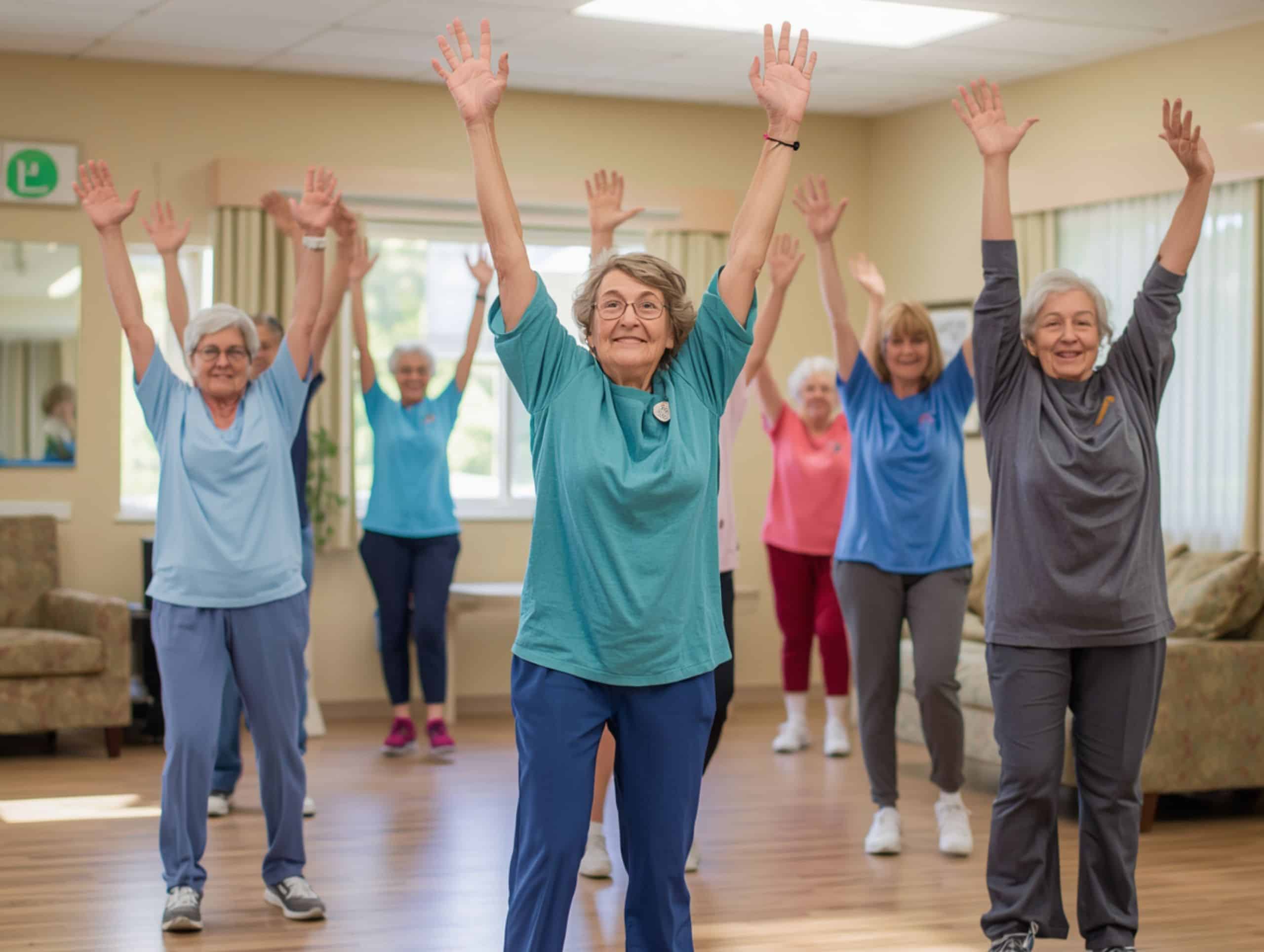
1. Daily activity programming. Our activity calendar runs seven days a week. Social events, creative sessions, music programs, outdoor gatherings, and holiday celebrations are scheduled throughout each day. Residents choose what they want to participate in — nothing is mandatory, but something is always available.
2. Communal dining experience. Meals are served in our bistro-style dining room at real tables. Residents eat together, not alone in their rooms. Our dietary team accommodates medical dietary restrictions while keeping meals appealing. The dining room is one of the most important social spaces in the facility.
3. Outdoor access and campus life. Our waterfront courtyards, garden walkways, and covered patios are open to residents and visiting families. Fresh air, natural light, and outdoor time are available every day — not limited to scheduled outings. Families are welcome to visit in the courtyards, the library, the dining room, or their loved one’s private suite.
4. Family engagement and communication. Visiting hours are flexible. Family events are scheduled regularly. Our staff communicates openly with families about their loved one’s emotional status — not just their therapy progress. If a resident is showing signs of depression or withdrawal, we address it with the care team and communicate with the family promptly.
Emotional well-being programs are part of our wellness center at Dolphin Pointe Health Care. We also offer muscle strengthening programs as part of our wellness services in Jacksonville, FL.
Emotional Well-Being Related Programs
The Right Environment Changes Everything. Come See Ours.
Recovery happens faster when the patient has a reason to keep going. Schedule a tour and see the dining room, the courtyards, the library, and the waterfront campus that our residents call home. Tours are free and available seven days a week. Call 904-914-8801 or contact us online. We serve patients and families from Arlington, University Park, Springfield, San Marco, Riverside, Mandarin, Orange Park, Regency, Downtown Jacksonville, and the Beaches communities.
Dolphin Pointe Health Care
5355 Dolphin Point Blvd, Jacksonville, FL 32211
Phone: 904-914-8801
Open 24 Hours