
Cognitive rehabilitation is the part of recovery that most patients don’t know exists until they need it. After a stroke, a traumatic brain injury, or a prolonged ICU stay, the brain’s ability to process information, hold onto new memories, pay attention to a conversation, solve everyday problems, and carry out multi-step tasks can all be damaged — even when speech and movement have come back. These cognitive deficits are what keep patients from living independently. A person who can walk and talk but can’t remember to take their medication, follow a three-step recipe, or manage a bank account isn’t ready to live alone. At Dolphin Pointe, our cognitive rehab program is run by licensed speech-language pathologists who specialize in the cognitive-linguistic skills that daily function depends on. We coordinate with our occupational therapy team — because cognitive skills and daily living skills are two sides of the same coin — and with our physical therapy team when motor recovery is part of the same care plan. We serve both inpatient and outpatient clients at our rehabilitation center in Jacksonville’s Arlington neighborhood.
What Cognitive Rehabilitation Includes in Jacksonville
Our cognitive rehabilitation program starts with a detailed evaluation of five core cognitive domains: attention, memory, executive function (planning and decision-making), processing speed, and sequencing (the ability to carry out multi-step tasks in the right order). Your speech-language pathologist uses standardized assessments and real-world task observations to identify exactly which domains are impaired and how severely. A patient who can’t follow a conversation has a different deficit than a patient who can’t plan a meal — and the treatment for each is different. From that evaluation, your therapist builds a plan that targets the specific cognitive skills you need to function at home, at work, or in your daily routine.
Treatment combines two approaches: restorative exercises that rebuild the cognitive skill itself, and compensatory strategies that teach you new ways to accomplish tasks when full restoration isn’t possible. For memory deficits, that might mean intensive recall exercises alongside training on how to use a daily planner, phone reminders, and written checklists to stay on track. For attention deficits, treatment includes focused attention drills that progressively increase distraction levels — because real life isn’t a quiet therapy room. For executive function and sequencing deficits, we practice real-world tasks — daily living routines like getting dressed in the right order, preparing a meal step by step, and managing a medication schedule. Our occupational therapy team works alongside the cognitive rehab program to practice these tasks physically while the speech therapist addresses the cognitive processing behind them. Patients from Arlington, University Park, Fairways Forest, and across Jacksonville work with our team on cognitive goals that are measured by what they can do in daily life — not just scores on a test.
Why Cognitive Rehabilitation Matters in Jacksonville
Cognitive deficits after stroke and brain injury are invisible disabilities. The patient looks fine. They walk, they talk, they smile. But they can’t manage their medications. They burn food on the stove because they forgot it was cooking. They can’t follow a conversation in a noisy room. They get lost driving to a store they’ve been to a hundred times. Families often don’t realize the scope of the problem until the patient is home and struggling — and by then, the family is managing risks they weren’t prepared for. Cognitive rehabilitation addresses these deficits directly, giving patients structured training that either restores the skill or teaches them a reliable workaround. The sooner it starts, the better the outcome — because the brain’s ability to rebuild cognitive pathways follows the same neuroplasticity window that physical recovery does.
Most outpatient therapy clinics in Duval County don’t offer dedicated cognitive rehabilitation. They may include a few cognitive exercises within a speech therapy plan, but structured cognitive rehab — with its own evaluation, its own goals, and coordination with OT for real-world task practice — is a specialized program that requires clinical depth most standalone clinics don’t have. At Dolphin Pointe, cognitive rehabilitation is a defined component of our neurological rehabilitation and stroke recovery programs. Our speech-language pathologists, occupational therapists, and physical therapists share the same building, the same records, and the same care plan — so cognitive work connects to functional work connects to physical recovery in a unified approach. Families from Colony Cove, Springfield, San Marco, Mandarin, and across Duval County choose Dolphin Pointe for cognitive rehab because this level of integration is what the evidence supports and what most other facilities in northeast Florida can’t provide.
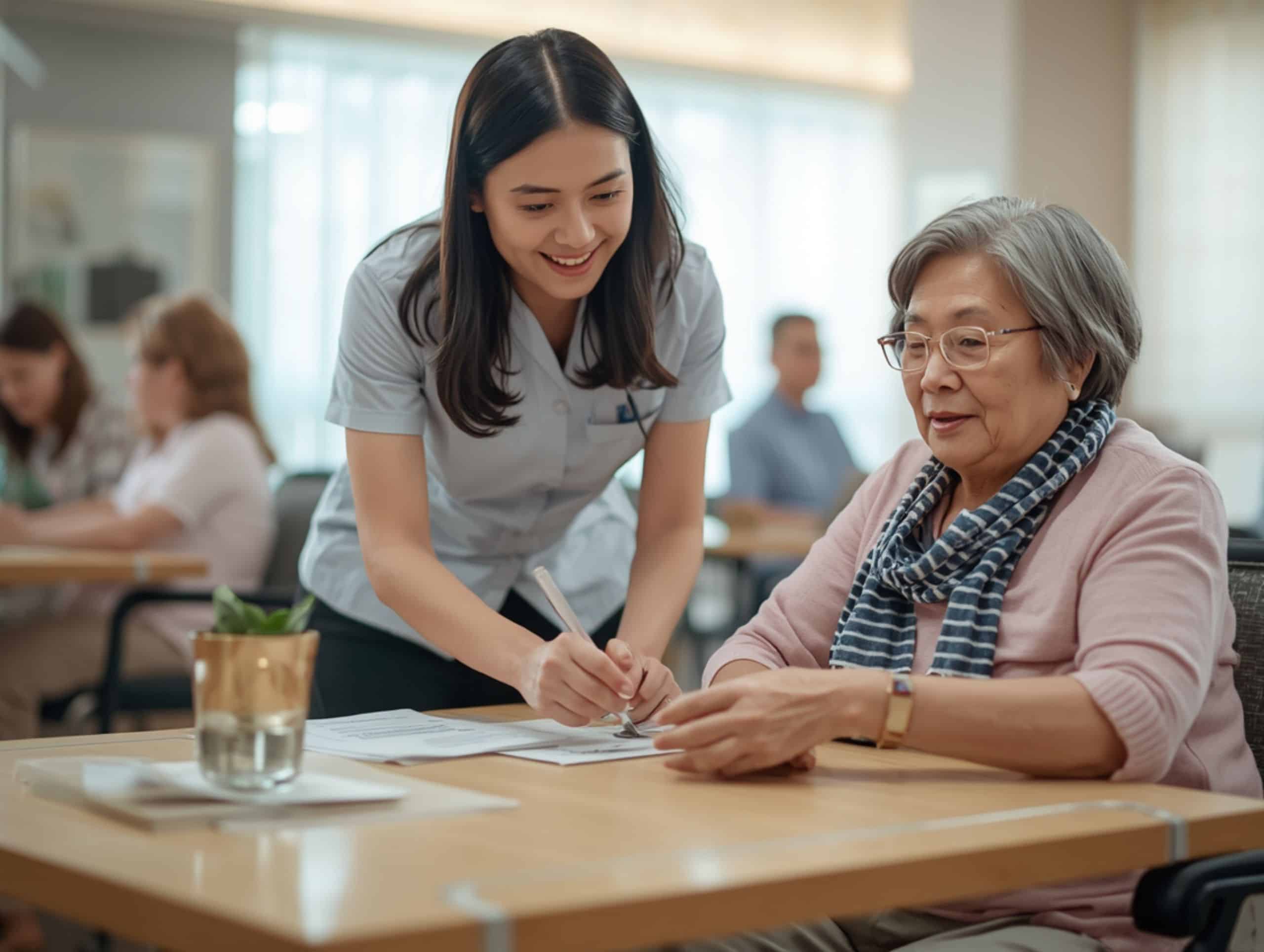
What to Expect During Cognitive Rehabilitation
1. Referral and cognitive evaluation. Your neurologist, physician, or hospital discharge team sends a referral. Our speech-language pathologist performs a detailed cognitive assessment — testing attention, memory, processing speed, executive function, and sequencing using standardized tools and real-world task observations. This evaluation takes about an hour and produces a clear picture of which cognitive skills are impaired and how they’re affecting daily function.
2. Individualized cognitive treatment plan. Based on your evaluation, your therapist sets specific functional goals — “able to manage a daily medication schedule independently,” “able to follow a three-step recipe without prompting,” “able to maintain a conversation for 10 minutes in a noisy environment.” These are real-life benchmarks, not abstract test scores.
3. Structured therapy sessions. Sessions combine restorative cognitive exercises with compensatory strategy training and real-world task practice. Your therapist progressively increases difficulty and distraction as your skills improve. For inpatient residents, sessions happen daily. For outpatient clients, typically two to three times per week. Your OT team practices the physical side of daily tasks in coordination with your cognitive goals.
4. Progress review and discharge planning. Your therapist tracks measurable progress at every session — both standardized test scores and functional performance on real-world tasks. When you’ve met your goals, you receive a home program with cognitive exercises, compensatory strategies, and guidelines for your family on how to support your cognitive function at home. If ongoing outpatient therapy is needed, we set that up before discharge.
Cognitive rehabilitation is part of our outpatient rehabilitation program at Dolphin Pointe Health Care. We also offer neurological rehabilitation, geriatric rehabilitation, and sports injury rehabilitation as part of our full rehabilitation center in Jacksonville, FL.
Cognitive Rehabilitation Related Programs
The Skills You Can’t See Are the Ones That Matter Most. Start Cognitive Rehab Today.
Walking and talking aren’t enough if you can’t manage your medications, follow a conversation, or remember what you did this morning. Cognitive rehabilitation rebuilds the thinking skills that independent living depends on. If you or a family member is struggling with memory, attention, or daily problem-solving after a stroke or brain injury, call us today. We serve patients and families from Arlington, University Park, Springfield, San Marco, Riverside, Mandarin, Orange Park, Regency, Downtown Jacksonville, and the Beaches communities.
Dolphin Pointe Health Care
5355 Dolphin Point Blvd, Jacksonville, FL 32211
Phone: 904-914-8801
Open 24 Hours