
Daily living skills training is the most practical service in rehabilitation. There are no abstract exercises. No machines. No resistance bands. Your occupational therapist hands you a shirt and watches you put it on. Hands you a toothbrush and watches you brush your teeth. Sets out the ingredients for a sandwich and watches you make it. The training is the task itself — performed under supervision, corrected in real time, repeated until the sequence becomes automatic again. At Dolphin Pointe, daily living skills training covers the complete set of routines that independent living requires: dressing, bathing, grooming, toileting, meal preparation, medication management, laundry, and light housekeeping. We coordinate with our speech therapy team for patients whose cognitive deficits affect sequencing — because knowing how to button a shirt physically and being able to plan the steps in the right order mentally are two different problems that require two different treatments. We serve both inpatient and outpatient clients at our rehabilitation center in Jacksonville’s Arlington neighborhood.
What Daily Living Skills Training Includes in Jacksonville
Our program covers two categories of daily living skills. The first is self-care: dressing (including managing buttons, zippers, socks, and shoes), bathing (getting in and out of the shower, washing every area of your body, drying off safely), grooming (brushing teeth, combing hair, shaving), toileting (managing clothing, sitting and standing from the toilet, hygiene), and eating (using utensils, cutting food, drinking without spilling). Each of these tasks has a specific physical and cognitive demand. A stroke patient with one-sided weakness needs a different dressing technique than an arthritis patient with limited grip. A brain injury patient who can physically perform the task but can’t remember the sequence needs cognitive retraining alongside the physical practice. Your occupational therapist evaluates which self-care tasks are impaired, identifies the specific barrier for each one, and builds a practice plan that targets the deficit.
The second category is household management: meal preparation (from simple snacks to full meals), medication management (sorting, timing, tracking), light housekeeping (laundry, dishes, countertop cleaning), and telephone and technology use (making calls, reading messages, using reminders). These are the tasks that determine whether someone can live alone or needs daily assistance. A patient who can dress and bathe independently but can’t prepare food or manage medications still isn’t safe alone. Our therapists practice these tasks in simulated environments at our facility — a kitchen setup, a medication station, a laundry area — so patients perform the real routine, not an exercise that represents it. For patients who need adaptive equipment — built-up utensils, one-handed cutting boards, button hooks, sock aids — we integrate the tools into task practice from the beginning. For inpatient residents, our nursing team reinforces the trained techniques at every meal, every dressing session, and every bathroom visit throughout the day. Patients from Arlington, University Park, Fairways Forest, and across Jacksonville work with our team on daily living goals that are scored by independence level — not by exercise repetitions.
Why Daily Living Skills Training Matters in Jacksonville
Insurance companies, hospital discharge teams, and physicians all use the same standard to determine whether a patient can go home: can they perform activities of daily living independently or with a manageable level of assistance? If the answer is no, the patient either stays in a facility, goes to a different level of care, or goes home with daily assistance that someone has to pay for and coordinate. Daily living skills training is the program that moves the answer from no to yes. Every task a patient regains — dressing without help, showering safely, preparing a simple meal — reduces their dependence on others and increases their chance of returning to the life they had before the medical event.
In Jacksonville’s population of older adults — many of whom live alone or with a spouse who also has physical limitations — the ability to perform daily living tasks independently is the deciding factor in whether someone stays home or needs residential placement. Most rehabilitation programs include some daily living work as part of a general OT plan. At Dolphin Pointe, daily living skills training is a defined, structured program with its own evaluation, its own progression, and its own discharge criteria. Our therapists don’t check a box and move on. They practice each task with you until you can do it reliably, consistently, and safely — in the same conditions you’ll face at home. Our home safety evaluation program makes sure the physical environment supports your abilities. Our cognitive rehabilitation program addresses the sequencing and memory deficits that affect daily routines from the planning side. And our 24-hour nursing team reinforces everything between sessions. Families from Colony Cove, Springfield, San Marco, Mandarin, and across Duval County choose Dolphin Pointe for daily living skills training because the program produces measurable independence — not just a report that says “patient participated.”
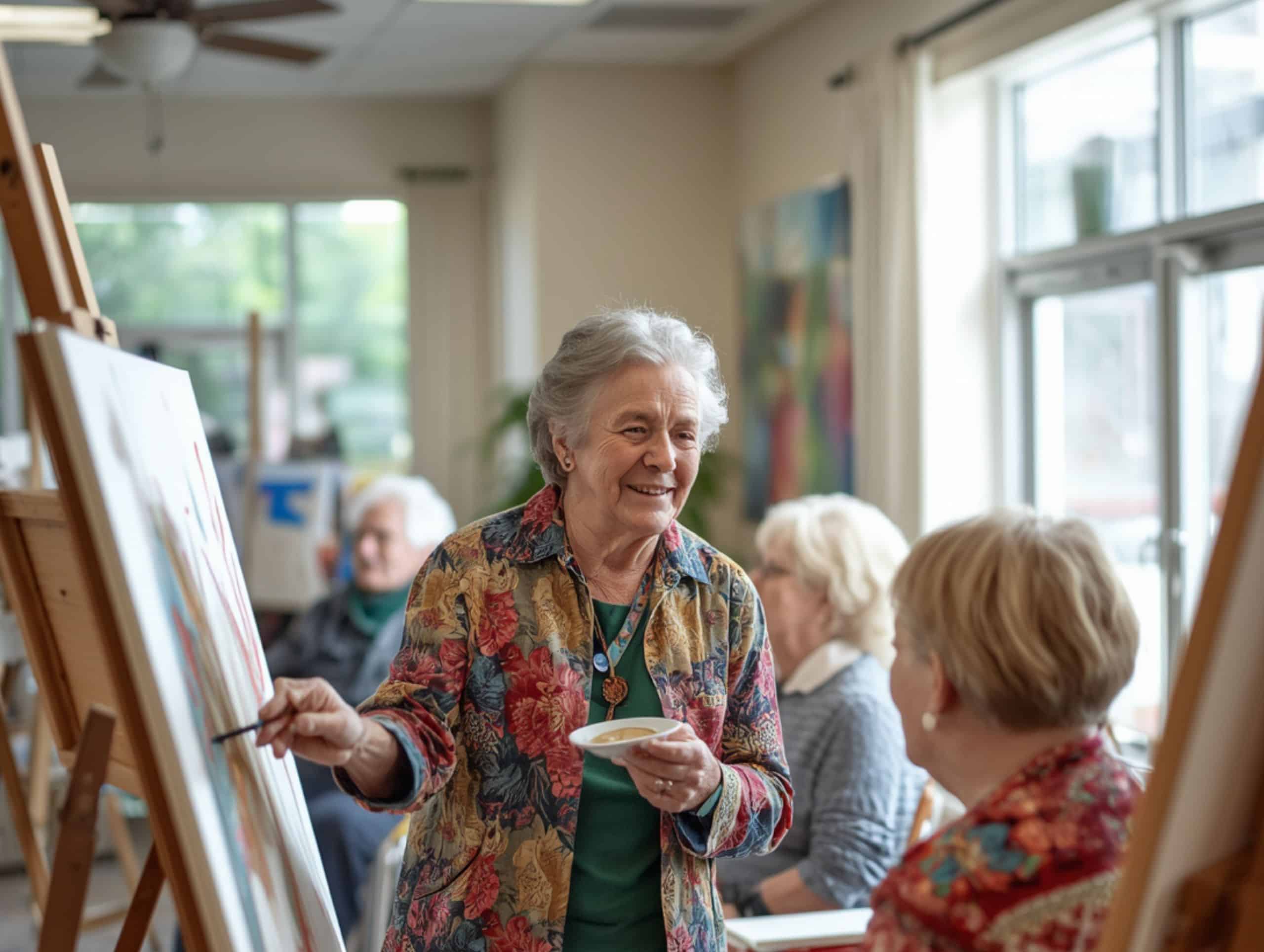
What to Expect During Daily Living Skills Training
1. Functional assessment of daily tasks. Your occupational therapist watches you perform each daily living task — dressing, bathing, grooming, toileting, eating, and household activities. Each task is scored by how much help you need: independent, needs verbal cues, needs hands-on assistance, or unable to perform. This assessment identifies exactly which tasks need training and what’s preventing you from doing them.
2. Task-by-task training plan. Based on your assessment, your therapist prioritizes the tasks that matter most for going home and builds a practice schedule. Self-care tasks (dressing, bathing, toileting) typically come first because they’re required for basic safety. Household tasks (cooking, medications, cleaning) follow as self-care skills improve.
3. Repetitive practice in realistic conditions. You practice each task under therapist supervision — in a real bathroom, at a real kitchen counter, with real clothing and real utensils. Your therapist corrects technique, introduces adaptive equipment when needed, and increases complexity as you improve. For inpatient residents, nursing staff reinforces the trained techniques between therapy sessions — at every meal, every bathroom visit, every dressing change.
4. Independence verification and discharge. When you can perform your target tasks reliably — multiple times, on different days, without prompting — you’ve met the independence threshold for that skill. Your therapist documents your independence level for each task, coordinates home safety modifications if needed, trains your family on how to support without doing, and provides a home practice guide. Your physician receives a full functional independence report.
Daily living skills training is part of our occupational therapy program at Dolphin Pointe Health Care. We also offer adaptive equipment training and home safety evaluations under our occupational therapist services in Jacksonville, FL.
Daily Living Skill Training Related Programs
Independence Is Built One Task at a Time. Start Training Today
If getting dressed, showering, cooking, or managing medications has become something you can’t do without help, structured practice with an occupational therapist can change that. Every task you regain is a step closer to going home and staying home. Call 904-914-8801 to schedule your evaluation. We serve patients from Arlington, University Park, Springfield, San Marco, Riverside, Mandarin, Orange Park, Regency, Downtown Jacksonville, and the Beaches communities.
Dolphin Pointe Health Care
5355 Dolphin Point Blvd, Jacksonville, FL 32211
Phone: 904-914-8801
Open 24 Hours